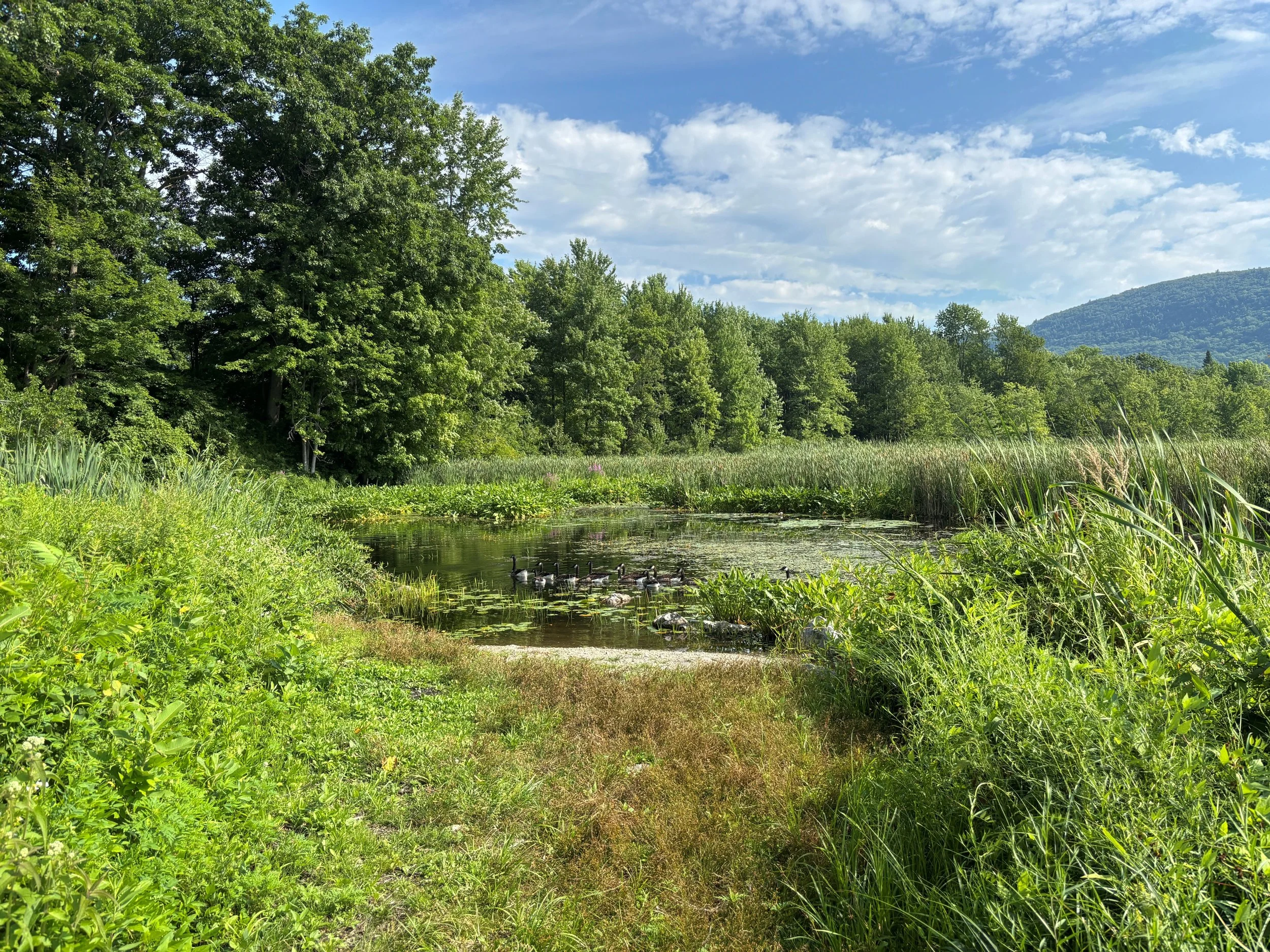
Canada Geese enjoy a sunny August morning on Bristol Pond. Photo credit: Maggie Grady
Another successful summer has concluded at Bristol and Monkton Ponds, where the Lewis Creek Association has placed stewards to inspect boats for aquatic invasive species (AIS) for the past seven years. The ponds are popular amongst anglers and recreational boaters from across Vermont, making them important locations to educate the public about aquatic invasive species. In 2026, boat launch stewards inspected over 250 boats entering and leaving the ponds. These interactions provide an opportunity to inform boaters about AIS spread prevention steps—cleaning aquatic debris off the boat, draining standing water, and drying the watercraft in the sun.
Of nearly 300 boat inspections at Bristol and Monkton Ponds, 34% recorded some type of plant matter. Of these, 64% contained aquatic invasive species including Eurasian watermilfoil (Myriophyllum spicatum), European frogbit (Hydrocharis morsus-ranae), and curly-leaf pondweed (Potamogeton crispus). Already established in Bristol Pond, Monkton Pond, and over 100 other Vermont water bodies, Eurasian watermilfoil is arguably the most prevalent aquatic invasive in Vermont. This species spreads easily and forms thick beds in lakes and ponds, impairing recreation opportunities and reducing habitat for native fish and plants. By inspecting boats leaving our water bodies and encouraging boaters to do the same, we hope to prevent AIS introductions in hundreds of other Vermont water bodies.
Due to the longevity of LCA’s Boat Launch Steward Program, many boaters are already on the lookout for invasive hitchhikers. Our numbers are encouraging—while 42% of boats contained invasive plant matter upon leaving the water, fewer than 1% of launching boats were contaminated with AIS. This indicates that AIS at Bristol and Monkton Ponds rarely travel from one boat launch to another, either being removed by boat launch stewards or boaters themselves. Nonetheless, even one AIS introduction event can be consequential. Preventing the introduction of AIS is much more feasible and cost-effective than eradicating an established population, so it is important to remain diligent when inspecting watercraft. If AIS do become introduced to a pond, managing the population before it becomes heavily established is also an option. When not inspecting watercraft, boat launch stewards manually removed European frogbit and Brittle naiad around the Bristol Pond dock. Brittle naiad has yet to spread beyond the mouth of the pond, making population control imperative to protect the pond’s ecosystem.
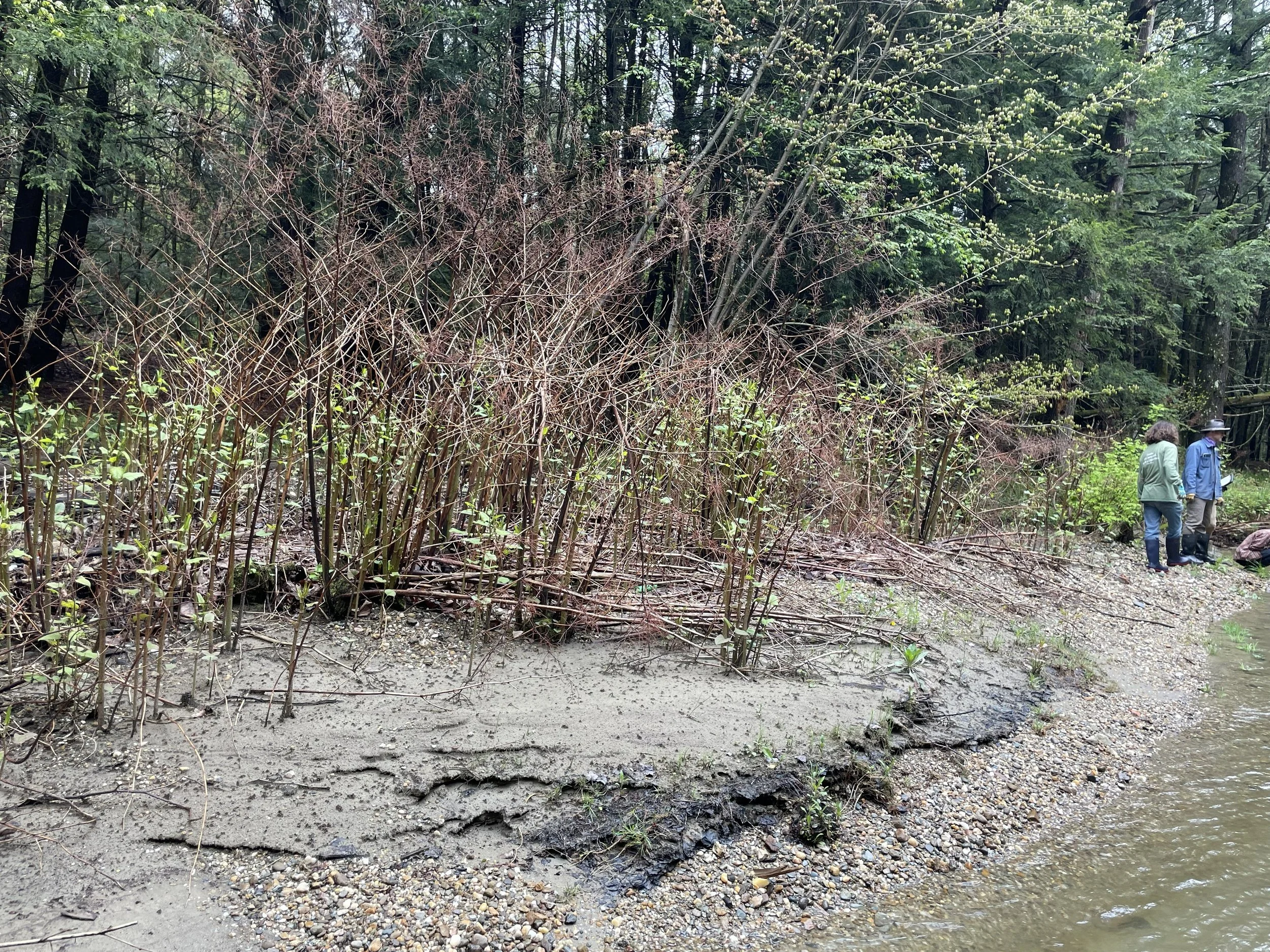
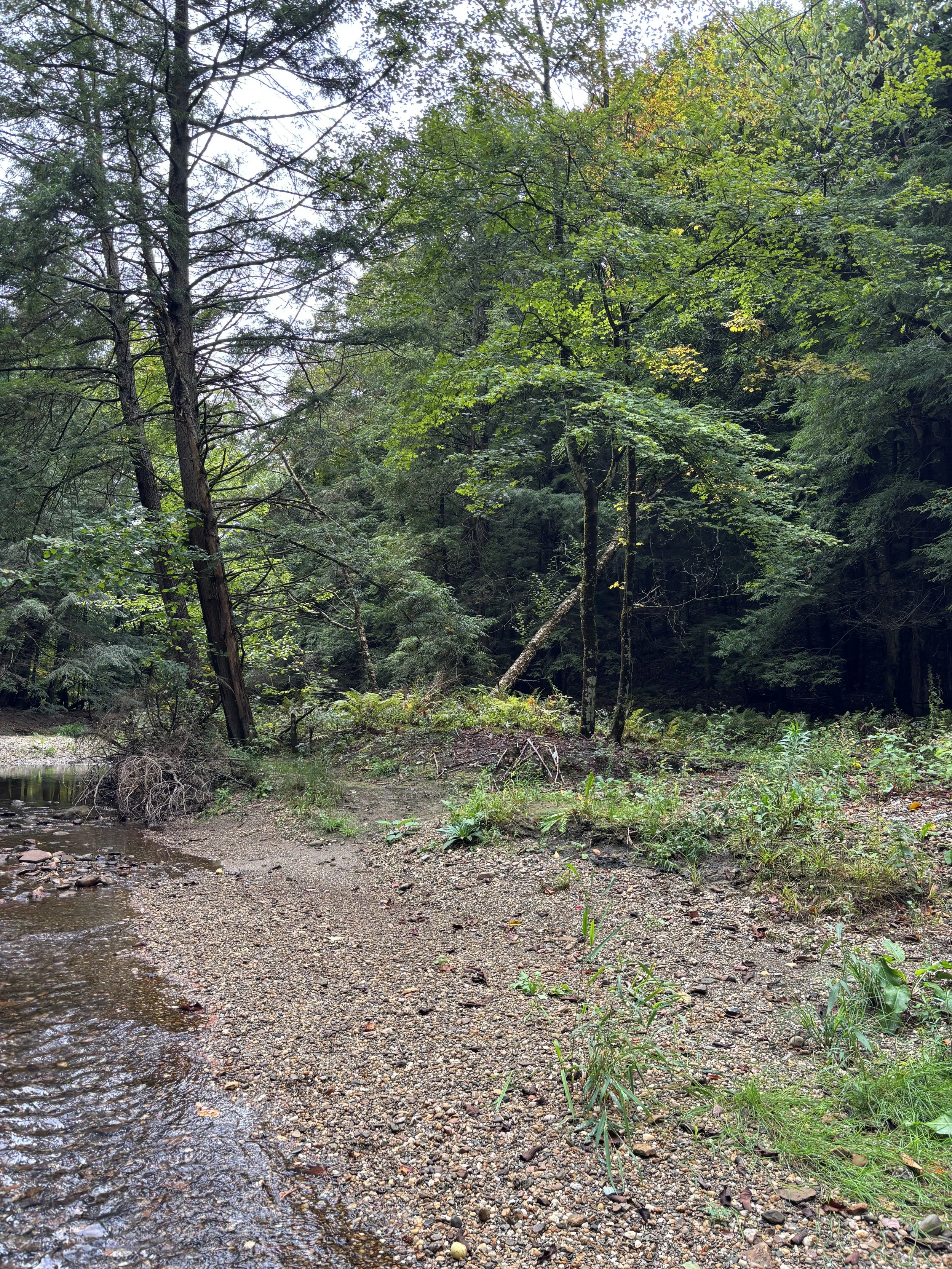
A knotweed patch at Common Ground Center, before (above; 6/15/2026) and after (right; 9/13/2026) about thirteen sessions, or one season of manual removal. Photo credits: LCA staff
The Lewis Creek Association’s efforts to control invasive Japanese knotweed (Reynoutria japonica) in the Lewis Creek watershed also continued from May to October of this year. When left uncontrolled, Japanese knotweed forms massive, tall patches which block sunlight, degrade soil, outcompete native plants, and reduce habitat for wildlife. The plant’s aggressive growth style means it can spread rapidly and exploit cracks in concrete, damaging infrastructure and reducing property values. LCA has managed knotweed patches in Ferrisburgh and at Cota Field in Starksboro since 2024 and 2025, respectively. An additional four patches at the Common Ground Center in Starksboro were managed for the first time in 2026. Because these patches grow directly along Lewis Creek, managing them reduces the likelihood of rhizomes washing into the river and establishing new patches throughout the watershed. Once a week, boat launch stewards visited eight Japanese knotweed patches across three sites and manually removed every stem, ranging in height from two inches to several feet. With guidance on knotweed removal from Mike Bald of Got Weeds?, stewards were able to remove approximately 100 cubic feet of knotweed stems and rhizomes, significantly reducing the size and vitality of the patches.
LCA hosts annual demonstration days during the growing season to inform landowners about knotweed management techniques. To stay informed about future knotweed removal demonstrations, you can join the LCA mailing list at www.lewiscreek.org/take-action. LCA also has an ongoing iNaturalist project to document knotweed patches across the Lewis Creek watershed, and we need your help! If you see knotweed growing in the Lewis Creek watershed, please snap a photo and upload it to iNaturalist; find more detailed directions and knotweed identification materials on our website.
This project (knotweed removal) has been funded wholly or in part by the United States Environmental Protection Agency under Assistance Agreement (LC00A01526) to NEIWPCC in partnership with the Lake Champlain Basin Program. The boat launch stewardship work was funded by the Vermont Department of Environmental Conservation’s Aquatic Nuisance Control Grant-in-Aid program, and the Waterwheel Foundation.

