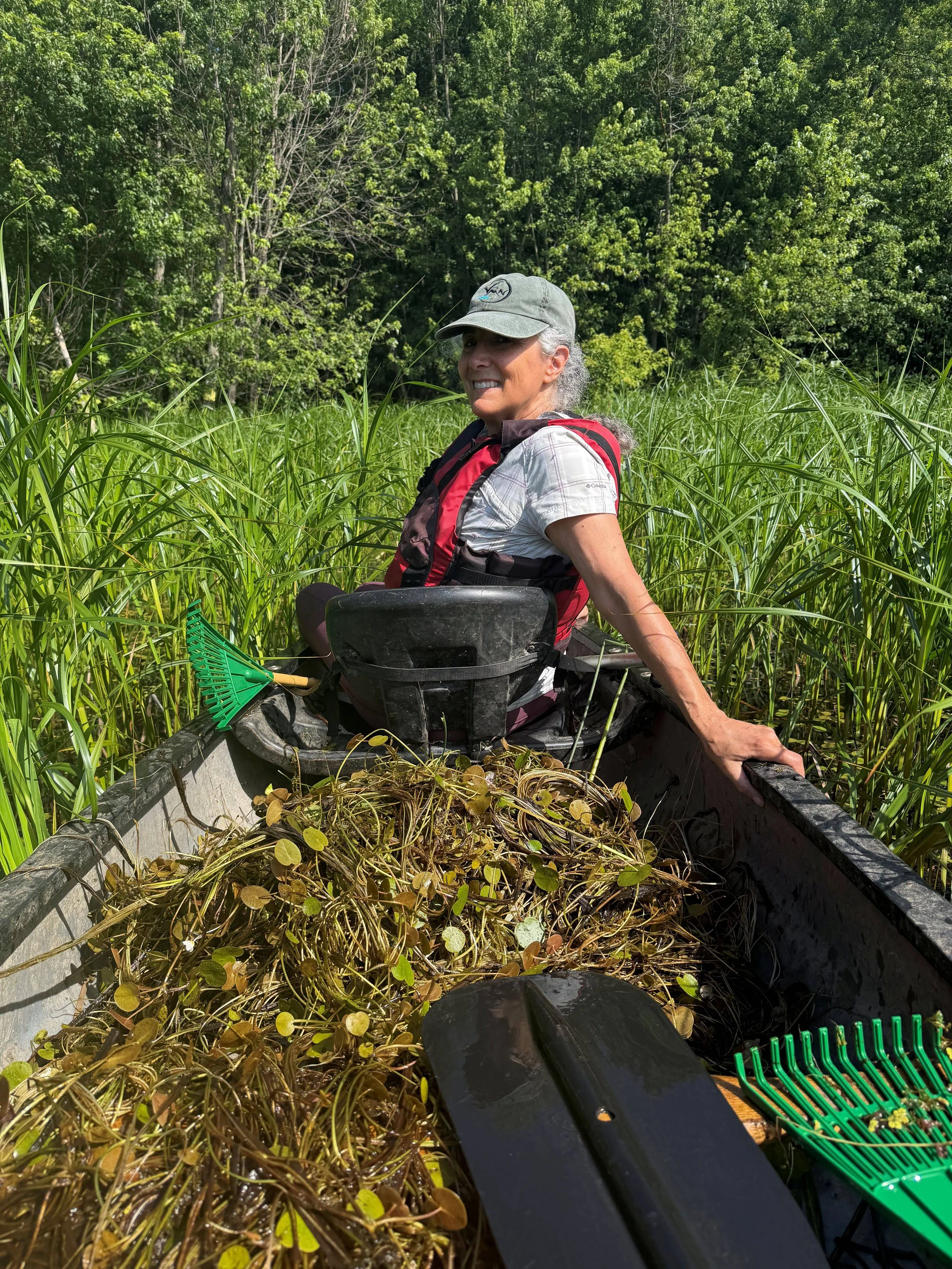
Testing the limits of the canoe! Longtime volunteer Roberta Nubile with a full load of European frogbit plants removed from Town Farm Bay on July 2, 2026. Photo credit: Olivia Welford
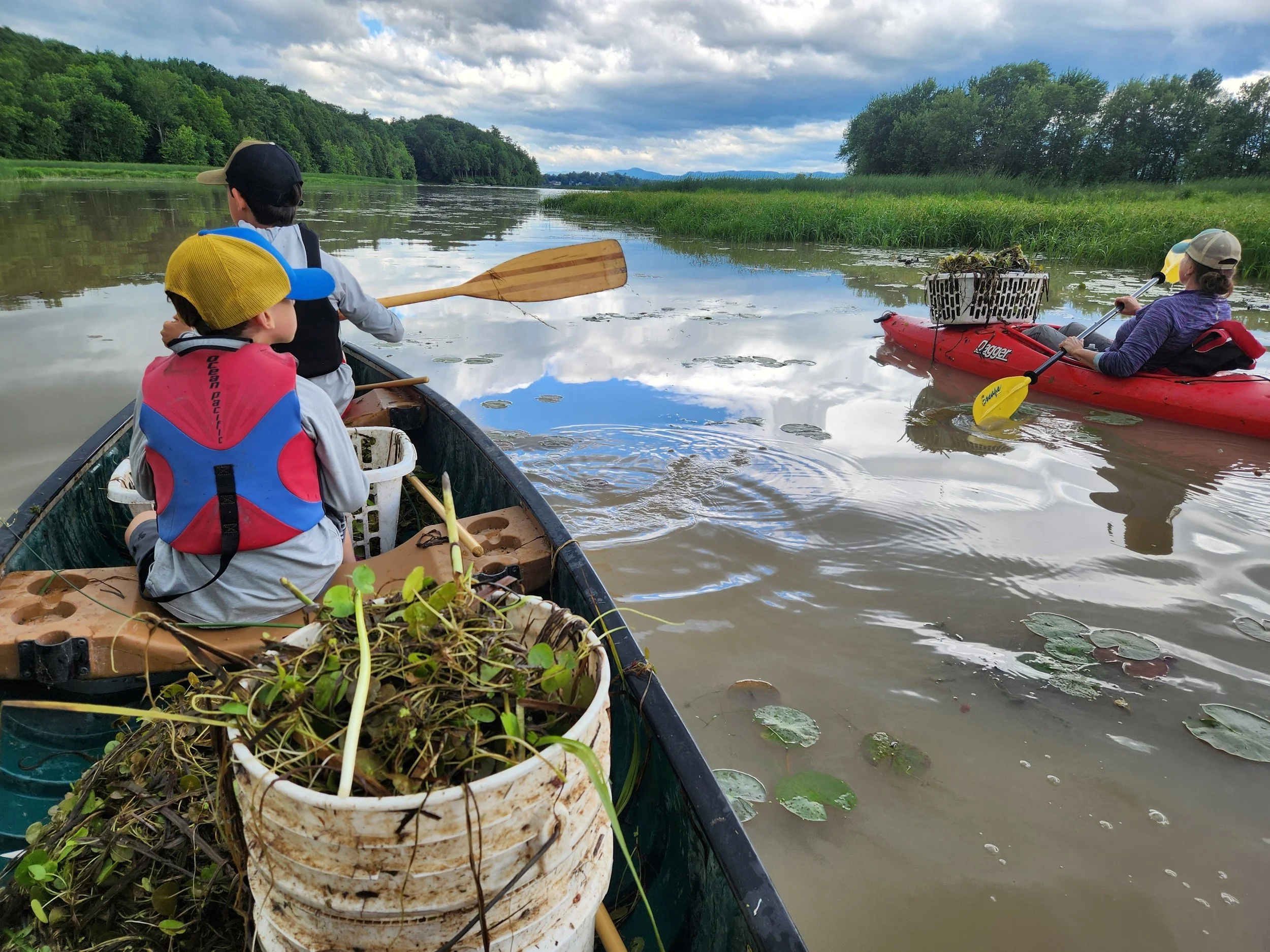
For yet another summer, volunteers of all ages hopped in kayaks and canoes to remove European frogbit, a non-native invasive plant species that spreads rapidly in bays and wetlands if given the opportunity. In 2007, Lewis Creek Association (LCA) initiated the “Water Quality Stewardship Program” and has since worked annually to manage the invasive plants and water quality of the rivers and streams that drain directly into Lake Champlain. The volunteer-driven frogbit removal project is the result of cooperation between many individuals and groups, including LCA, the towns of Charlotte, Shelburne, and Hinesburg, Shelburne Bay Boat Club, and a supportive Charlotte property owner.
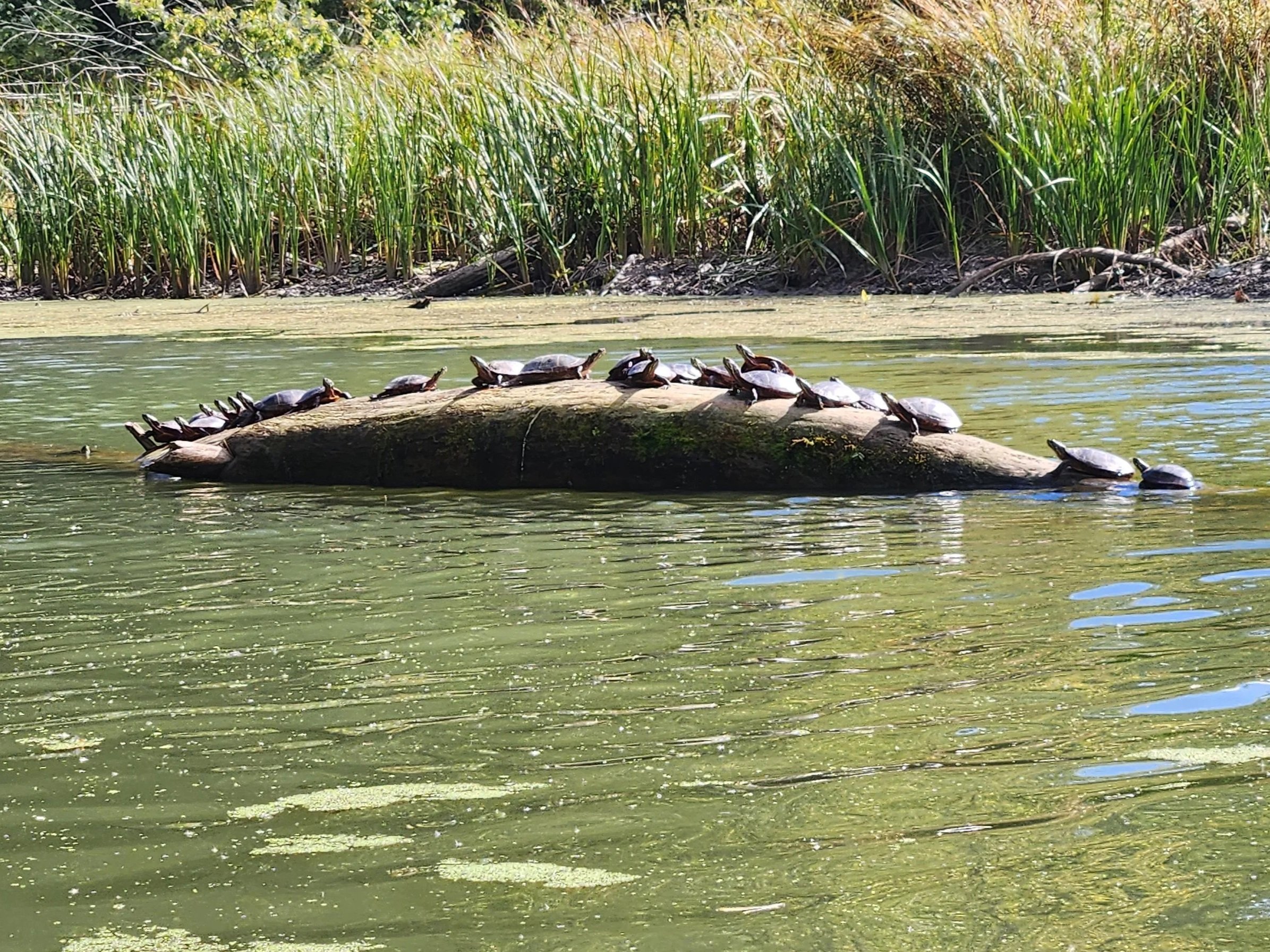
Painted turtles sunning on a log in the LaPlatte River on September 26, 2026. Photo Credit: Sara Lovitz
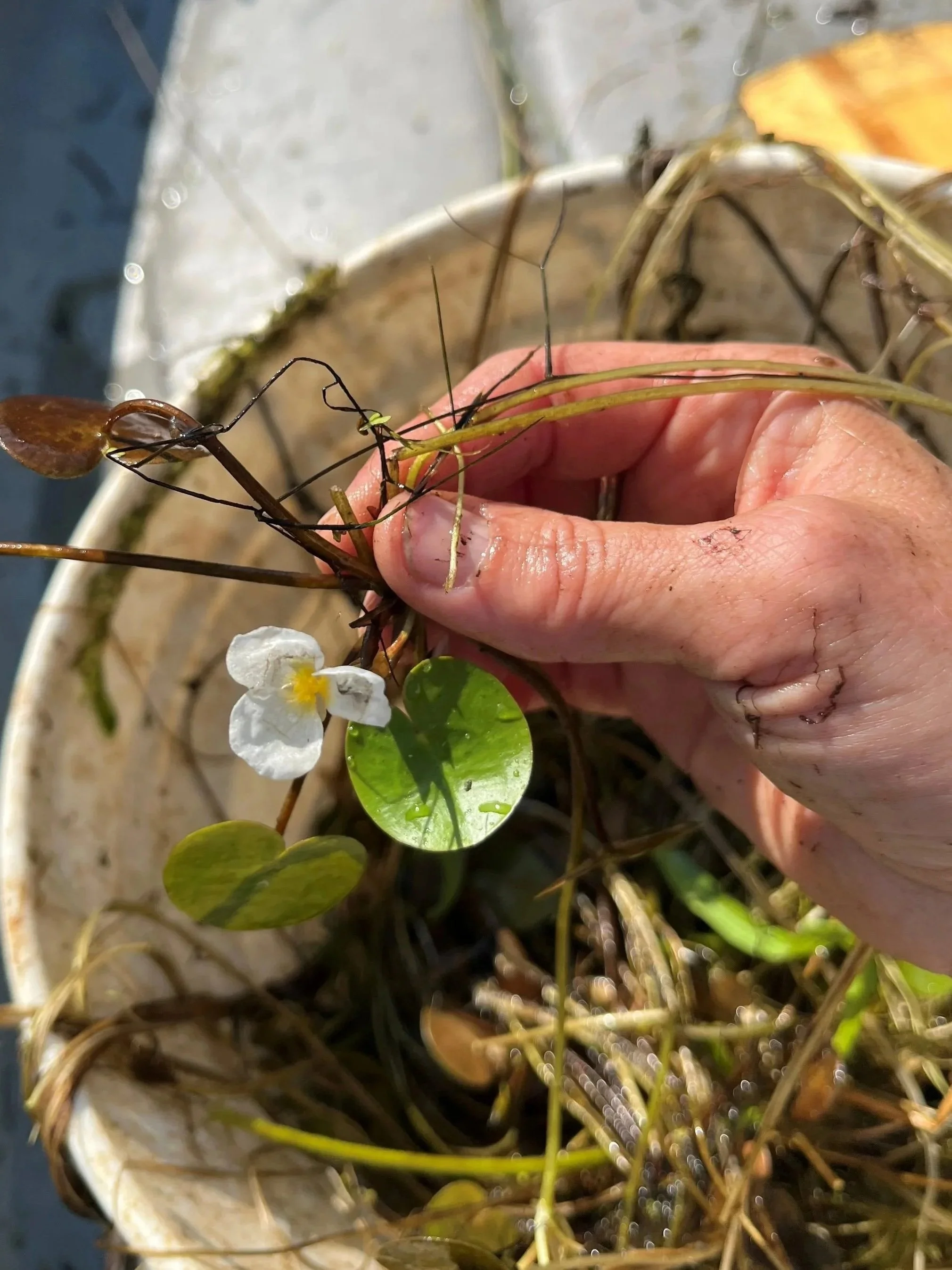
Frogbit flowering in Town Farm Bay, Charlotte. Photo credit: Margie Brenner
European frogbit, a common aquarium plant, spread to the United States via the St. Lawrence River after it was introduced to arboretum ponds in Ottawa in 1932. It is now considered an aquatic invasive species (AIS) because it dominates native species in the competition for sunlight, nutrients, and surface area. LCA’s volunteer efforts have proven highly successful since friends of LCA discovered frogbit covering 50% of Town Farm Bay in 2007. Annual paddling and weeding trips, with a side of bird- and turtle-watching, have reduced the coverage of frogbit to just under 5% cover. In contrast, when frogbit was discovered in the wetlands of the LaPlatte Natural Area, it had a much lower percentage cover; this gave LCA’s program and volunteers the opportunity for “early detection, rapid response.” Though the invasive plant will never be eradicated in either location, maintaining this low population allows native plants and animals to thrive.
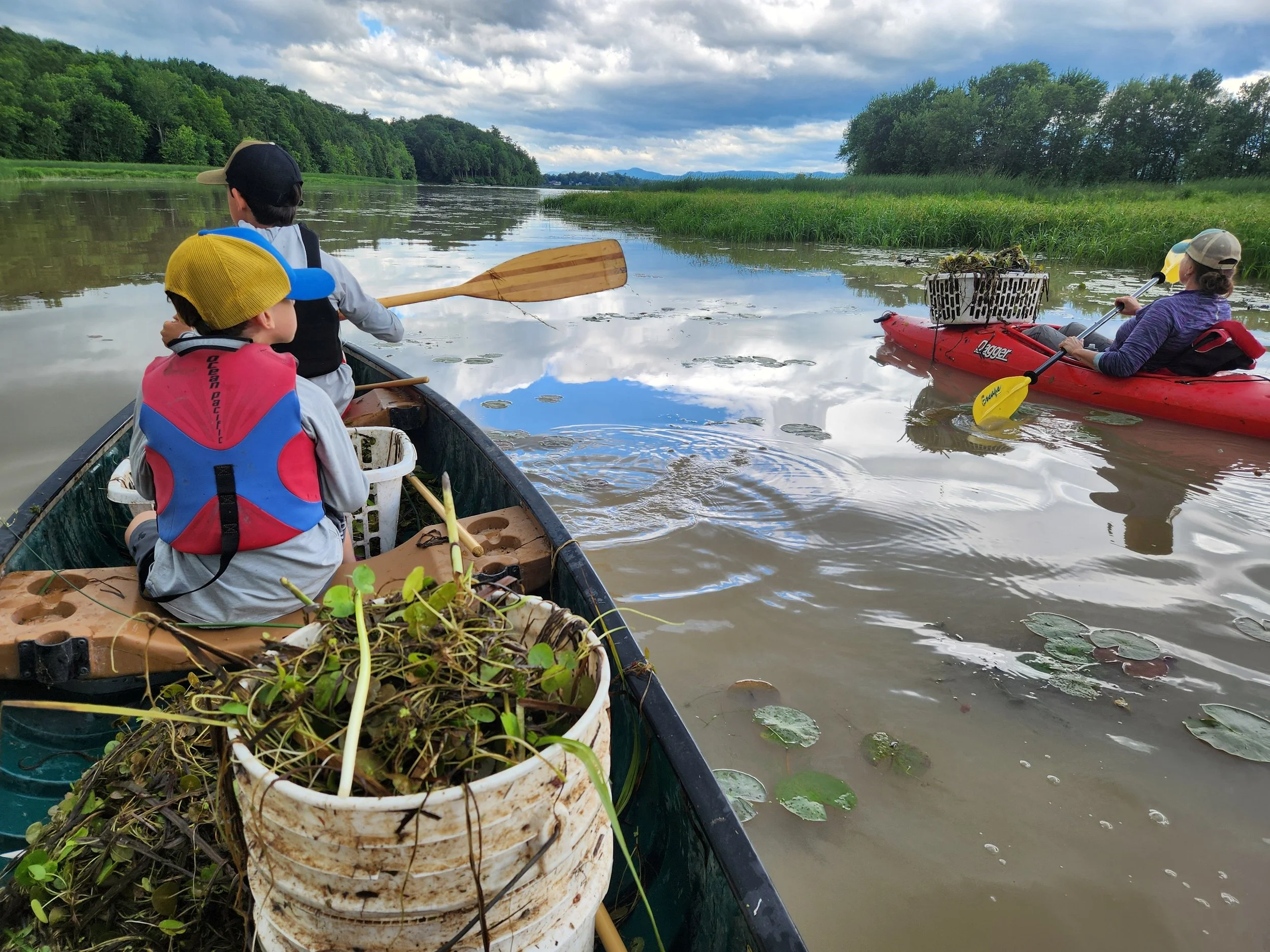
Paddling back to the launch after a successful morning picking frogbit in Town Farm Bay, Charlotte. Photo Credit: Sara Lovitz
This summer (June and July) in Town Farm Bay in Charlotte, 59 volunteers spent 224 hours removing 2,235 pounds of frogbit, slightly less than what was harvested in 2025. In the Lower LaPlatte River in Shelburne, 17 volunteers spent 66 hours harvesting 1,095 pounds of Frogbit, the most frogbit harvested there since 2017. While water levels were not as high as they were in early 2025, the higher lake levels throughout June and the beginning of July allowed access to areas that are inaccessible when water levels are lower, and made frogbit more visible as water levels submerged the native lily pads, which increased the amount harvested by volunteers. The increase in frogbit in the LaPlatte River wetlands will continue to be monitored and additional volunteer removal days added if necessary to keep the population in check. You can learn more and check out our frogbit removal efforts over time on our webpage at www.lewiscreek.org/frogbit.
In addition, ten water chestnut rosettes, another aquatic invasive species, were found and removed in Town Farm Bay in July. This was the highest number of water chestnuts found in Town Farm Bay since 2014 (there were 30 plants removed in 2013, 15 in 2014, and 0-3 plants per year since then). Special attention will need to be paid to make sure this plant doesn’t become established.
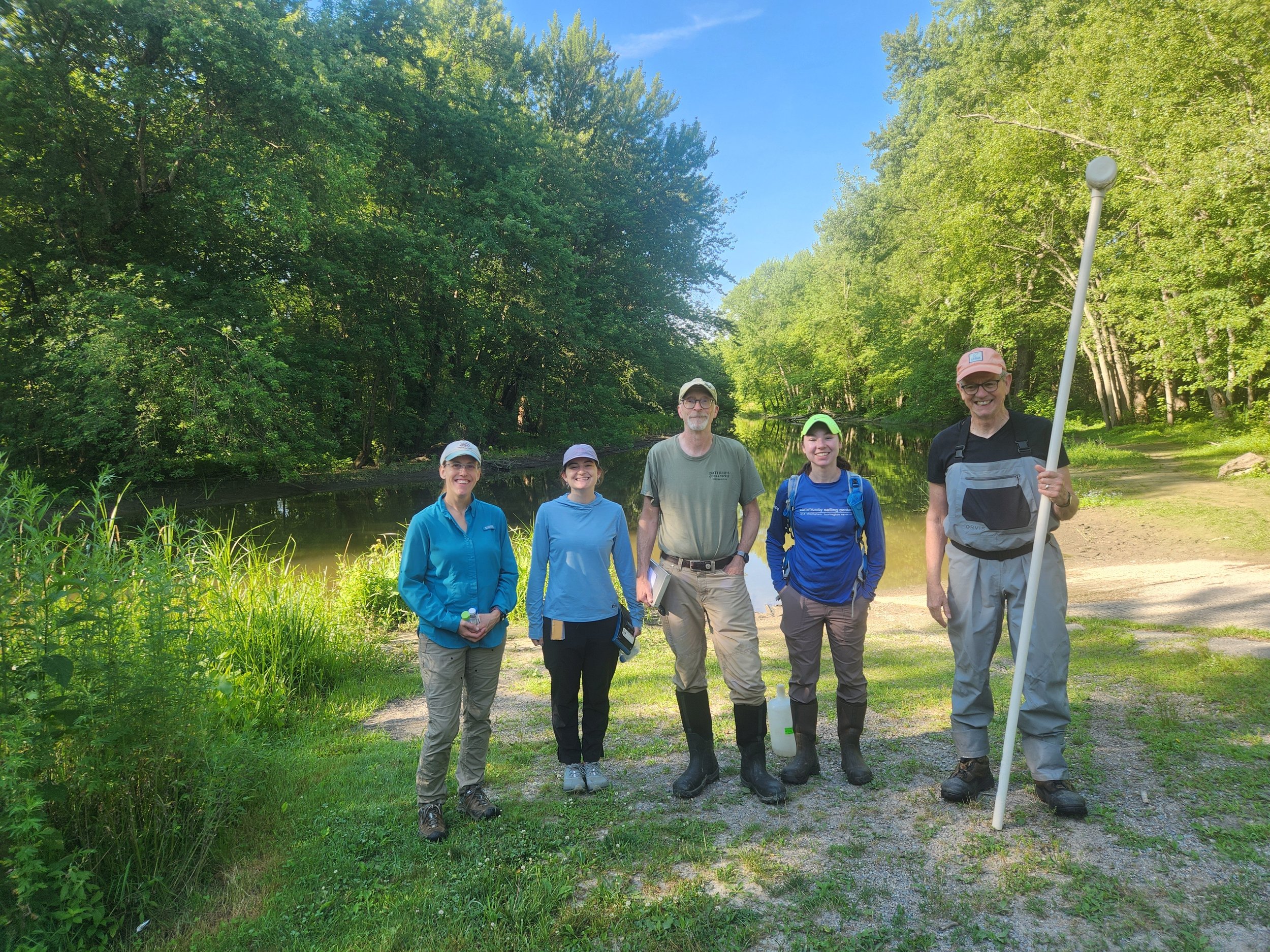
SCRW sampling volunteers, LCA Program Manager Kate Kelly, and VT DEC LaRosa Partnership Program Staff on a Quality Control site visit at the sampling site at Lewis Creek Fishing Access on Long Point Road. Photo Credit: Sara Lovitz
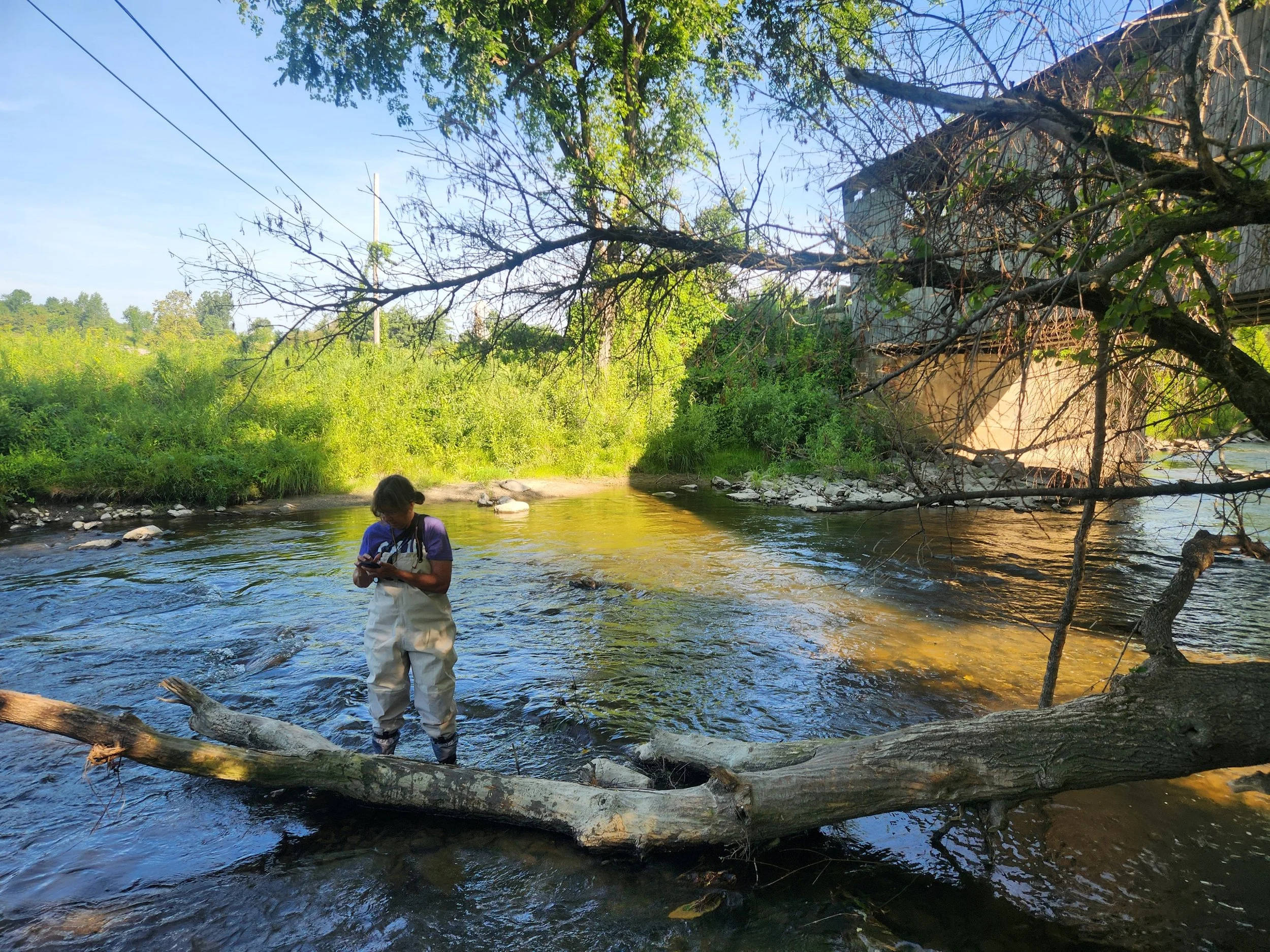
SCRW volunteer, Abby Killey, collecting a sample at the Quinlan Covered Bridge site. Photo Credit: Sara Lovitz
LCA’s Water Quality Stewardship Program also includes the annual monitoring of water quality in the LaPlatte River, Patrick Brook, McCabe’s Brook, Thorp Brook, Kimball Brook, and Lewis Creek and its tributaries, by volunteers for South Chittenden River Watch (SCRW). Volunteers collect water samples which are then analyzed by the Vermont Agricultural and Environmental Laboratory as part of the state LaRosa Partnership Program, and interpreted by LCA technical consultants and staff. The sampling season finished in mid-August, with 28 SCRW volunteers collecting from 19 sampling sites, sampling eight times over 16 weeks. This resulted in 164 phosphorus, 113 nitrogen, & 147 chloride samples analyzed, to help understand sources of nutrient loading to Lake Champlain so we can prioritize potential water quality improvement projects, such as riparian buffer plantings, gravel wetlands, wetland restoration projects and more. Results from 2026 will be available on LCA’s website in the winter of 2026-27, along with 2021-25 results, at https://bit.ly/LCA-WaterQuality. Check out more information on water quality and what you can do to improve it on LCA’s YouTube channel at https://bit.ly/LCA-youtube.
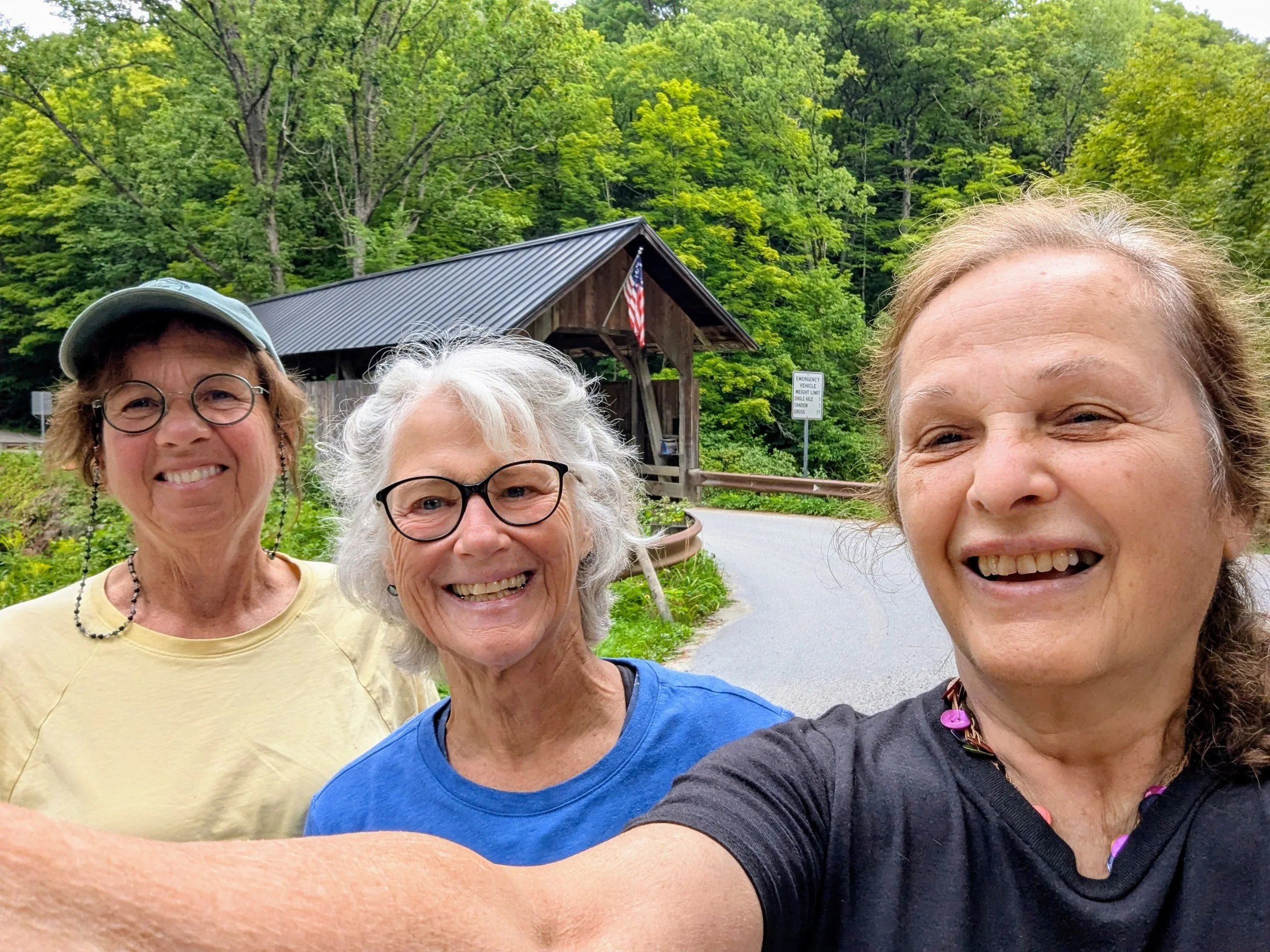
Happy SCRW volunteers at their Sequin Covered Bridge sampling site. Photo credit: Kate Schubart
This Water Quality Stewardship Program is important for maintaining productive, functioning, and scenic waters, and also allows residents of Charlotte, Shelburne, and Hinesburg to become advocates for water quality. Volunteers in each town help share this information with neighbors and friends, helping improve water quality in the future. This program being funded through your Town budget is crucial, since it allows the whole community to take ownership of local water quality and natural resources that are extremely important to protect. This will result in healthier ecosystems that all citizens can enjoy.
As a special treat this year, frogbit removal and water sampling volunteers received a coupon for a free small creemee or ice cream from Vermont Cookie Love to enjoy after their hard work! Thank you to Vermont Cookie Love for supporting our volunteer efforts in the watershed! If you are interested in assisting with water quality monitoring or invasive plant removal in 2027, please reach out to Sara, LCA Watershed Program Assistant, at sara@lewiscreek.org.